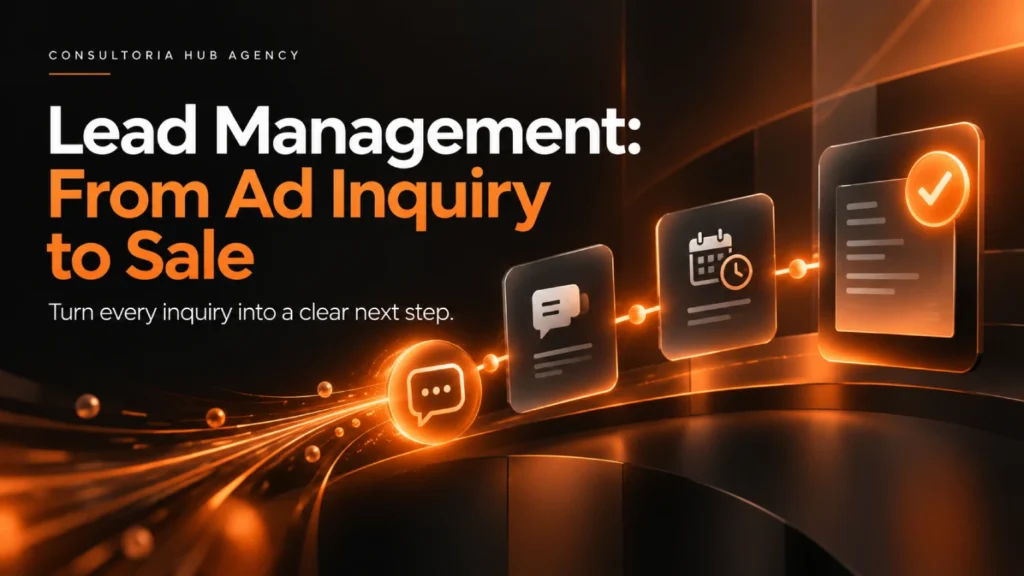
An ad can bring a new inquiry in seconds. That person may ask a question on WhatsApp, submit a website form or call the business. If the answer comes late or the lead is passed between employees without context, the money spent on the ad has done only half the job.
Lead management is the process of capturing an inquiry, assigning responsibility, recording what the customer needs and following through to an outcome. It connects marketing with sales. For Pakistani businesses running Meta or Google ads, even a simple process can make performance easier to understand.
Capture the source of each inquiry
Record where a lead came from, such as a specific ad campaign, website form, social page, call or referral. Source information helps the team see which channels bring serious buyers. It also helps the person replying understand what offer the customer saw.
Do not rely only on a screenshot of an ad or a salesperson’s memory. Decide how the source will be recorded when the inquiry first arrives and what happens if the information is unavailable.
Respond with context
A good first response acknowledges the request and moves the conversation forward. If someone clicked an ad for a specific service, asking “What do you need?” without reference to that service can feel disconnected. Give the sales team the offer details, current price or quote process, availability and any conditions before the campaign launches.
Set an internal response target that your team can realistically meet. If inquiries arrive outside working hours, use a clear acknowledgment and assign them for the next shift. Avoid promising instant support if the team cannot provide it.
Qualify with a few useful questions
Not every inquiry is ready to buy. Ask for the information required to suggest the right next step. A website project may need business type and scope. A local service may need city and preferred appointment time. A product order may need item, quantity and delivery location.
Keep questions short and relevant. A complicated questionnaire can end a conversation before it starts. Record the answers so another team member can continue without asking everything again.
Assign one owner and next action
A lead should have a clear owner, status and next step. If a quote is being prepared, record who will send it and when. If a customer wants a callback, schedule it. If the lead is not suitable, note why and close the record cleanly.
This avoids two common problems: several employees contacting the same customer, and nobody contacting them at all.
Build a useful follow up routine
Follow up based on what the customer requested. Someone waiting for a proposal may appreciate a relevant check in. Someone who said they are not interested should not be placed in an aggressive reminder sequence. Use templates for consistency, then personalise the message with the actual context.
Track whether the next step happened, not only whether a reminder was created. A task marked complete without a recorded outcome gives the owner little insight.
Measure results beyond cost per lead
Ad dashboards can show spend and inquiries, but a business also needs to know which inquiries were qualified, which received a quote and which became customers. Define these stages before reporting results. Where practical, connect revenue or order value to the lead record.
A low cost inquiry is not necessarily valuable. If one campaign brings many irrelevant messages and another brings fewer but more suitable customers, the second may be better for the business. Review performance together with the sales team, not in the ad account alone.
Start with a workable system
A small business can begin with a shared lead sheet and agreed process. As volume grows, a CRM can help manage assignments, reminders, access and reporting. Choose the system after defining the workflow, not before. Test with real inquiries and adjust what staff actually use.
Consultoria Hub Agency works across Meta ads, websites and custom CRM planning. If your campaigns are bringing inquiries but you cannot see what happens next, map the journey from first click to confirmed sale and identify where leads are being lost.
Frequently asked questions
What is the difference between a lead and a qualified lead? A lead is an inquiry. A qualified lead matches the business’s defined criteria, such as location, requirement and ability to take the next step.
Can I manage leads without a CRM? Yes, for low volume. Use a shared record with source, owner, status and next action, then review whether a CRM is needed as the workload grows.
Which team should own lead quality? Marketing and sales should review it together. Ads affect who inquires, while response and follow up affect whether an inquiry becomes a customer.
Related reading
- WhatsApp Ads in Pakistan: How to Turn Messages Into Useful Leads
- Business Automation in Pakistan: 7 Processes Small Businesses Can Improve
Explore our services, browse our case studies or contact Consultoria Hub for a free consultation.